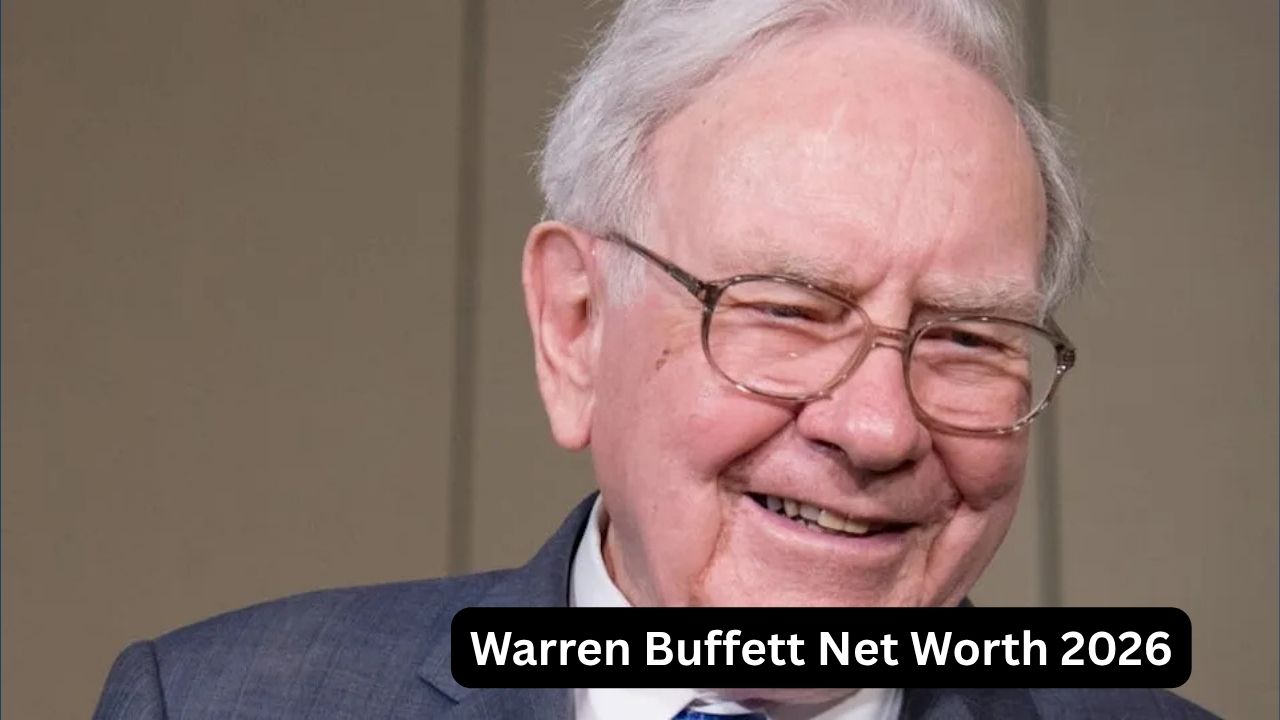
Warren Buffett Net Worth 2026: Inside the Oracle of Omaha’s $140+ Billion Fortune
Warren Buffett has been a fixture on every wealthiest-people-in-the-world list for so long that it’s easy to forget just how unusual his fortune actually is. Most billionaires his size made their money in tech, retail, or oil. Buffett made his by buying stocks and businesses patiently, for six decades straight, and just… not selling.
Warren Buffett Net Worth 2026
As of early-to-mid 2026, most trackers put Warren Buffett’s net worth somewhere between $130 billion and $150 billion. Forbes had him around $146.5 to $149 billion in January 2026, Bloomberg’s index came in a touch higher near $150 billion, and a few other trackers landed closer to $130-140 billion depending on how they valued Berkshire Hathaway’s stock that day. The range exists for the same reason it does with any billionaire whose wealth sits almost entirely in one company’s shares — the number moves with the stock, and different services check at slightly different moments.
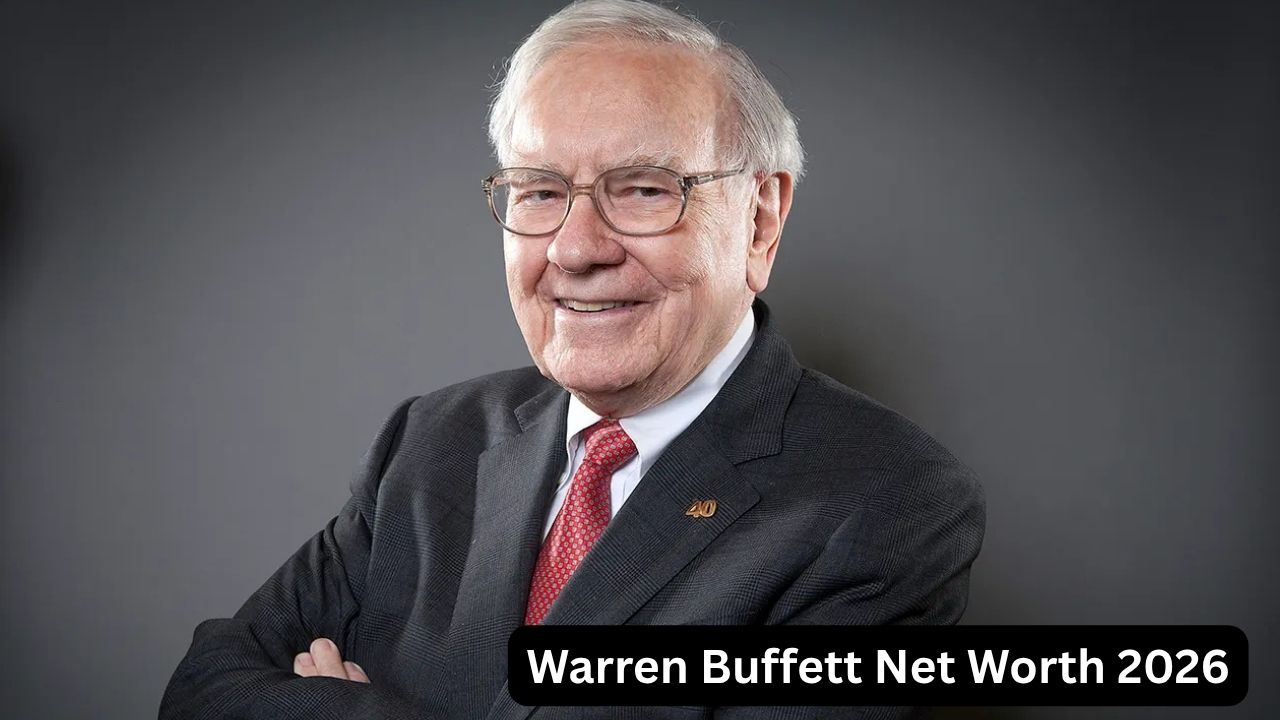
What makes 2026 a genuinely notable year in Buffett’s story, though, isn’t really the dollar figure. It’s that he’s no longer running the company. Buffett stepped down as Chairman and CEO of Berkshire Hathaway on December 31, 2025, handing the reins to his long-time deputy, Greg Abel. For the first time since 1970, Berkshire Hathaway is entering a fiscal year without Buffett at the controls, and the market’s reaction to that transition has become one of the key factors shaping his net worth this year.
How Buffett’s Wealth Is Actually Structured
Unlike founders such as Mark Zuckerberg or Elon Musk, who built companies from scratch around a single product, Buffett’s fortune comes from decades of buying stakes in other people’s businesses. Berkshire Hathaway itself started life as a struggling New England textile mill. Buffett took control of it in 1965 almost by accident — he’d been buying shares as a value play and ended up running the whole company after a dispute with its previous management.
From there, he turned Berkshire into something closer to a diversified holding company than a traditional operating business. It owns insurance giants like GEICO, railroads like BNSF, a sprawling portfolio of public equities including massive stakes in Apple and Coca-Cola, and dozens of smaller subsidiaries spanning everything from candy to utilities. Buffett owns somewhere around 15% to 16% of Berkshire’s shares personally, and that stake is essentially his entire net worth. There’s no side real estate empire, no private jet company, no crypto portfolio sitting alongside it — just one concentrated, decades-long bet on a business he built himself.
His salary tells the same story. Buffett has taken a base salary of around $100,000 a year for decades, a number that’s almost comically small next to his net worth. It’s not a PR stunt so much as a reflection of how little his day-to-day pay ever mattered to his overall wealth. Nearly everything he has has come from Berkshire’s stock price compounding over an extraordinarily long stretch of time.
Warren Buffett Net Worth by Year
| Year | Estimated Net Worth | Main Driver |
| 2008 | $62 Billion | Named world’s richest person by Forbes |
| 2010 | $47 Billion | Post-financial-crisis market recovery |
| 2013 | $53.5 Billion | Steady Berkshire stock growth |
| 2015 | $72.7 Billion | Strong insurance and railroad earnings |
| 2017 | $75.6 Billion | Broader bull market gains |
| 2019 | $82.5 Billion | Continued equity portfolio growth |
| 2020 | $73 Billion | Pandemic-era market volatility |
| 2021 | $96 Billion | Market rebound, strong Apple stake performance |
| 2022 | $97 Billion | Resilient during broader tech sell-off |
| 2023 | $106 Billion | Insurance profits, buyback program |
| 2024 | $133 Billion | Record Berkshire cash reserves, Apple stake trims |
| 2025 | $152 Billion (peak) | Strong year before year-end retirement |
| 2026 | Roughly $130B–$150B (fluctuating) | Post-retirement transition to Greg Abel |
A couple of things stand out here. Buffett’s wealth has never swung as violently as some of the tech-founder fortunes people compare him to — there’s no single year where he lost or gained more than about 20% of his overall net worth. That steadiness is basically the whole philosophy of Berkshire Hathaway playing out in real time: insurance float, dividend-paying stocks, and a business model built to survive downturns rather than chase the next boom. Even during 2022, when growth and tech stocks were getting hammered across the board, Berkshire actually held up better than most of the market, which is part of why Buffett’s fortune barely dipped that year while plenty of tech billionaires lost tens of billions.
The Path From an 11-Year-Old Investor to Omaha’s Most Famous Businessman
Buffett was born on August 30, 1930, in Omaha, Nebraska, and the stories about his early interest in money border on legend at this point. He bought his first stock at age 11. He filed his first tax return at 13. By his teenage years he was already running small businesses — delivering newspapers, reselling golf balls, and setting up pinball machines in local barbershops.
He studied under Benjamin Graham at Columbia Business School, and Graham’s ideas about value investing — buying businesses for meaningfully less than what they’re actually worth, then being patient — became the foundation of everything Buffett did afterward. After a stint working directly for Graham’s investment firm, Buffett returned to Omaha and eventually formed his own investment partnership before taking control of Berkshire Hathaway in the mid-1960s.
What followed is one of the longest sustained runs of outperformance in market history. From 1965 through 2025, Berkshire’s stock delivered annualized returns north of 19%, versus roughly 10% for the S&P 500 over the same stretch. Compounded over sixty years, that gap turns into a genuinely staggering difference — Berkshire’s total return over that period is often cited in the millions of a percent, a number so large it barely feels real next to more typical investment returns.
The 2025 Retirement and What Changes Now
Buffett had signaled the move for a while. At Berkshire’s annual shareholder meeting in March 2025, he told the room he intended to step back, and he’d hinted at the idea even earlier, writing in a 2023 shareholder letter that he felt like he was “playing in the extra innings.” Even so, when the retirement was formally announced, it caught plenty of people off guard — reportedly, only his two children, Howard and Susie, knew the exact timing in advance.
Greg Abel, who had run Berkshire’s non-insurance operations for years and was long seen as the most likely successor, officially became Chairman and CEO on January 1, 2026. Buffett has stayed on in a reduced capacity and has said he plans to keep sending his famous shareholder letters, including his long-running Thanksgiving message to Berkshire followers.
The market’s reaction to a “post-Buffett” Berkshire has been one of the more closely watched storylines of 2026. Early results have been reassuring to most analysts — Berkshire’s core businesses, from GEICO to BNSF Railway, have kept performing solidly, and the company’s enormous cash reserves give it a cushion that few conglomerates can match. But some of the swings in Buffett’s own net worth this year reflect that broader uncertainty about how Berkshire performs without its founder directly steering the ship.
Where the Money Actually Comes From
Berkshire’s revenue has grown enormously over the past decade, climbing from around $211 billion in 2015 to roughly $371 billion by the end of 2025 — a jump of more than 75%. That growth comes from a genuinely wide spread of businesses: insurance premiums, freight revenue from BNSF, retail and manufacturing subsidiaries, and dividends flowing in from Berkshire’s massive public stock portfolio, which includes a stake in Apple large enough that it’s occasionally been described as one of the biggest “Apple shareholders” in the world without actually being a tech company itself.
That diversification is a big part of why Buffett’s fortune has been so durable. When one part of the business slows down — say, insurance underwriting in a rough year — another part, like the railroad or the equity portfolio, often picks up the slack. It’s a very different model from founder-led tech companies, where the entire fortune can rise or fall on a single product cycle or earnings call.
The Giving Pledge and What His Net Worth Doesn’t Show
One detail that consistently gets lost in net worth rankings is how much of Buffett’s original fortune simply isn’t there anymore — on purpose. Buffett has pledged to give away 99% of his wealth over his lifetime, and he’s already donated more than $60 billion to charitable causes, mostly through the Gates Foundation and, more recently, through foundations run by his three children.
Without those donations, some analysts estimate his net worth today would be closer to $185 billion to $200 billion. In other words, the headline number that shows up on billionaire lists is, by design, a significant undercount of the wealth Buffett actually created over his career — he just chose to send a huge chunk of it out the door rather than let it sit in his own name.
Buffett co-founded the Giving Pledge alongside Bill and Melinda Gates back in 2010, encouraging other billionaires to commit the majority of their fortunes to philanthropy rather than passing it down entirely to their heirs. More than 250 families have signed on since then. Buffett has been candid about his reasoning over the years, saying he wants his children to have enough money to do anything, but not so much that they end up doing nothing.
A Few Quick Facts
- Born August 30, 1930, in Omaha, Nebraska.
- Bought his first stock at age 11 and filed his first tax return at 13.
- Studied value investing under Benjamin Graham at Columbia Business School.
- Took control of Berkshire Hathaway in 1965 after it was a failing textile company.
- Owns roughly 15% to 16% of Berkshire Hathaway personally.
- Took a symbolic annual salary of around $100,000 for decades.
- Retired as Chairman and CEO on December 31, 2025, succeeded by Greg Abel.
- Has donated over $60 billion to charity and pledged to give away 99% of his fortune.
Frequently Asked Questions
What is Warren Buffett’s net worth in 2026? Most estimates place it between roughly $130 billion and $150 billion, depending on the source and the date Berkshire’s stock was last checked.
Is Warren Buffett still the CEO of Berkshire Hathaway? No. He retired as Chairman and CEO on December 31, 2025. Greg Abel took over as Chairman and CEO starting in 2026.
How did Buffett make his fortune? Almost entirely through his ownership stake in Berkshire Hathaway, which he built over six decades from a failing textile company into a conglomerate spanning insurance, railroads, retail, and a large public stock portfolio.
Why doesn’t his net worth include all the money he’s made? Because he’s given so much away. Buffett has already donated more than $60 billion to charity and has pledged to give away 99% of his wealth over his lifetime, so his “official” net worth understates the total wealth he’s created.
Does Buffett still play an active role at Berkshire? He’s stepped back from day-to-day leadership but has said he plans to remain involved in some capacity and continue writing his well-known annual shareholder letters.
How does his fortune compare to other billionaires? Buffett typically ranks somewhere between the 9th and 10th wealthiest person in the world as of 2026, behind figures like Elon Musk and several tech founders, but he remains one of the very few billionaires whose fortune was built almost entirely through investing rather than founding a company from scratch.
Warren Buffett’s net worth tells two stories at once. On one level, it’s a straightforward reflection of Berkshire Hathaway’s stock price on any given day — a number that moves up and down like any large public company’s valuation. On another level, it’s a snapshot of one of the most disciplined, patient investing careers in modern history, deliberately shrunk by tens of billions of dollars because Buffett decided early on that giving the money away mattered more than holding onto it. As Berkshire heads into its first full year under new leadership, that legacy — as much as the dollar figure itself — is what people will keep coming back to read about.